Friday, June 15, 2018

Home Grown Research Team develops early detection for gum disease!

“Smart Tooth” Detects Periodontitis


Researchers from the Washington University School of Medicine in St. Louis and the School of Engineering & Applied Science are developing “smart tooth” technology that could be used to detect the early signs of certain diseases such as periodontitis and diabetes in high-risk patients by analyzing saliva or gingival crevicular fluid. 
“Salivary-based biosensors have generated a lot of interest because of their potential for wide applications in medicine,” said Erica Lynn Scheller, DDS, PhD, assistant professor of medicine, cell biology, and physiology at the School of Medicine. “We’re initially working to develop a biological sensor that measures specific peptides active in periodontal disease, and that would be used in combination with a wireless device to retrieve that data.” 
“It’s like an electronic tooth,” said Shantanu Chakrabartty, MS, PhD, professor of electrical and systems engineering in the School of Engineering & Applied Science and a partner on the project, currently funded by a four-year, $1.5 million grant from the National Institutes of Health.
The “smart tooth” is a tiny sensor and electronic chip that’s about a few millimeters cubed in volume. Designed to be inserted inside the gumline or as part of a dental appliance, it features bio-recognition elements that measure disease-specific peptides, which are natural or synthetic groups of amino acids. 
As a first attempt, the researchers will work toward monitoring peptides related to bone breakdown in periodontitis. A wireless ultrasound device would then read the peptide levels and connect to the medical data cloud. However, chemistry remains one of the project’s biggest challenges.
“You only have a finite number of bio-recognition elements conjugated to the transducer if you are using an antibody that is specific to these peptides,” said Srikanth Singamaneni, MS, PhD, associate professor of mechanical engineering and materials science. “They get saturated fairy quickly. The question is, how do you refresh those sensors? That’s one of the aspects we are working to address with this project.” 
The researchers say that developing a new, minimally invasive system that can detect and monitor gum disease and the effectiveness of treatment would be beneficial to the 64 million United States residents with periodontal disease and to their dentists. Also, the researchers are interested in developing other applications for the technology that, while likely years away, could go well beyond the dentist’s chair.
“We’re developing this sensing platform that can be expanded to include additional tracking for inflammatory markers, stress markers, and diabetes monitoring,” said Scheller. “Really, anything you can think of that you’d want to track in the oral cavity, we’re developing both the platform and the specific application.”

Friday, May 18, 2018

MY GUMS ARE RECEDING, WHAT DO I DO?

Receding gums are also known as gingival recession. The pink gum tissue normally covers the root of the tooth. This can become exposed when the gum is pushed back or if the tooth is in an abnormal position.
Receding gums are common and often unnoticed at an early stage. There are many risk factors, but age is a main one - 88 percent of people older than 65 have receding gums in at least one tooth. However, recession can be seen developing as early as the teen years.
The main concern with receding gums is that when the roots of the teeth become exposed, they are at risk for decay, infection, and loss. Treatment can stop or reverse the process of gum recession if begun at an early stage.
If the recession is severe and the patient has symptoms such as tooth sensitivity, pain, or infection, a variety of treatment options are available. These include deep cleaning, medicine to fight infections, and even tissue grafts.  In fact, tissue grafts done by your periodontist are the most natural way of treating lost gum/gingiva.

What is gum recession?

[teeth and gums up close]
The gums protect the fragile tooth roots from bacteria, plaque, and other forms of decay.
Gingival recession is the exposure of the roots of teeth after experiencing a loss of tissue in the gum.
The gums are also known as the gingivae. The gingiva is the moist pink tissue in the mouth that meets the base of the teeth. There are two such gums - one for the upper, and one for the lower set of teeth.
The gingiva is a dense tissue with a good supply of blood vessels beneath a moist surface. The surface is called mucous membrane. It is joined to the rest of the mouth lining but is pink instead of shiny red.
The gums tightly surround the teeth up to the neck of each one and are firmly attached to the jaw bone. The gums usually cover the roots of the teeth, protecting them as they are more fragile than the rest of the teeth.
Gingival recession  causes a loss of the tight firm gum tissue at the neck of the teeth which exposes the fragile mucous membrane to the harsh environment that the gingiva is designed to protect. Thus  allowing the tooth roots to be directly exposed to bacteria, plaque, and food making the tooth more susceptible to decay of the root. Bone loss occurs as the recessions progresses and the end result can be the loss of tooth or teeth.

Causes

Poor oral hygiene and periodontal disease are linked to gingival recession. But 
receding gums can happen in people with good standards of oral hygiene, too.
Broadly, there are two causes of receding gums:
  • Physical wear of the gums
  • Inflammation of the gum tissues - this is a reaction of the immune system
Some people are more prone to receding gums because of inherited factors. These factors include their tooth position and gum thickness.
Physical wear of the gums by vigorous tooth brushing or use of hard bristles is a     common cause of receding gums.
[teeth and gums examined]
The two main causes of receding gums are physical wear and inflammation of the gum tissue.
People with this problem otherwise have good oral hygiene. The teeth and gums otherwise appear healthy when receding gums are caused by over-brushing.
This type of recession often affects the left side more. This is because most people use a toothbrush in their right hand and so put more pressure on the left gums. The pattern also tends to affect the side gums more than the front.
Other physical factors that push the gums back include lip piercings, misaligned teeth, and damage caused by dental treatment.
Some people are more prone to the inflammatory causes of receding gums. Thinner gum tissue makes inflammation caused by plaque more likely. The gums are more delicate in some people.
Periodontal disease is a common cause of gum recession. Periodontal disease causes the loss of the supporting bone around a tooth through an inflammatory reaction. The gum recession tends to affect all the teeth in a similar way.
Periodontal disease is caused by plaque buildup. Plaque is a sticky film that forms on the teeth. Bacteria, mucus, cells, and other particles are involved in the formation of plaque.
When plaque builds up on teeth, it causes:
  • Inflamed gums known as gingivitis. This condition can lead to periodontitis
  • Periodontitis results in spaces between the gums and teeth and loss of connective fibers and bone around the tooth roots. This leads to receding gums
Tartar is hardened plaque and cannot be removed by tooth brushing. Instead, it must be removed at a dentist's office.

Effects

Many people with receding gums have no concern about them early on. Many others are unaware that they have recession.
For some, though, the concern may be about:
  • Appearance
  • Fear of tooth loss
  • Sensitivity due to exposed tooth roots
Assessing concerns about the way gums look may include checking how much of the gums are on show.
For some people, the gums show when talking and smiling. Others have a different lip line that does not expose the gums to view.

Treatment

Most cases of mild gum recession do not need treatment. Dentists may simply give advice about prevention and offer to monitor the gums. Teaching people how to brush gently but effectively is a good early intervention. It is always advisable to visit a periodontist to evaluate your recession. This is because the periodontist can intervene with minor surgical treatments that can stop further recession and may be able to replace lost gum tissue if the reccession is treated early enough.
For people who do need treatment, a number of options are available:
[teeth with braces]
Orthodontics are one method of treatment for receding gums.
  • Desensitizing agents, varnishes, and dentine bonding agents: These aim to reduce any sensitivity that may develop in the exposed tooth root. This treats the nerve symptoms and helps to keep normal oral hygiene by allowing brushing of sensitive teeth to continue. However, when the sensitivity does not respond to these treatments a periodontist may be able to recover the exposed root with specialized gum grafting techniques.
  • Composite restoration: Tooth-colored composite resins are used to cover the root surface. They can also close black gaps between teeth.
  • Pink porcelain or composite: This is the same pink color of the gums. This is done when the recession is so severe that root coverage can not be achieved with grafting procedures.
  • Orthodontics: Treatments designed to move the position of teeth can correct the gum margin.
  • Surgery: Tissue is grafted from elsewhere in the mouth and heals over the gum recession. This is the most natural method of replacing the lost biologic tissue. You simply replace what was lost with what nature intended to be there in the first place.

How to prevent receding gums

Some of the causes of gingival recession are preventable.
The most obvious preventable cause is brushing the teeth too harshly or by using hard-bristle toothbrushes. People should avoid doing this to prevent receding gums
Plaque buildup leads to periodontal disease, so careful oral hygiene can also help prevent receding gums.

Friday, April 20, 2018

Dr. Duello Advancing Dental Education in Our Community

HOW THE DIGITAL WORD IS IMPACTING DENTISTRY


This was the subject of the Open House and mini CE course at our office this past Wednesday night. Dr. Duello continues to work hard to bring the best of the growing digital technologies to his practice and share the benefits of these technologies with the St. Louis dental community.

The X-Guide by X-Nav Technologies was the darling of the night.  This GPS guided surgery technology has made "perfect" implant placement a reality. X-Guide allows for the transfer of the 3D treatment plan direct to the patient's mouth for the surgical procedure utilizing GPS technology to precisely place dental implants. Basically, it creates a virtual surgical guide rather than a physical one, thus reducing the margin of error to .222microns.
Dr. Duello demonstrating X-Guide 
Dr. Duello in our teaching facility with a group local dentists


Dr. Duello continues to embrace the burgeoning growth of the digital world in dentistry because it ultimately allows the dental practitioner to give patients what they truly want: less time in the dental chair and a  very predictable outcome.

Friday, April 6, 2018

Periodontal Disease and Age-Related Macular Degeneration

Gum Disease May Cause Blindness


We've been reporting that periodontal disease is associated with many systemic inflammatory diseases, but now there is emerging evidence that a specific bacteria may contribute to age-related macular degeneration.

The anaerobic gram-negative bacteria Porphyromonas gingivalis (Pg) is the root of this evil. If you or a loved one have symptoms of gum disease then you need to act. Gum treatments are a relatively easy way to prevent devastating systemic diseases that can threaten your eyesight and even your life. Below is a synopsis of the new research into the age-related macular degenration that is associated with Pg.


Many clinical studies link Chronic Periodontitis (CP) to various systemic disorders and lately age-related macular degeneration (AMD), a leading cause of irreversible vision loss in elderly, is found to be associated with periodontal disease. The keystone oral-pathobiont and one of the major causative organism for CP, Porphyromonas gingivalis (Pg), has been identified with the ability to invade epithelial, fibroblasts and dendritic cells. "Our study was designed with an objective to interrogate the role of Pg and its fimbriae-mediated infection of human retinal-pigment epithelial cells and retro-orbitally injected mice retina, thus revealing possible molecular links between CP and AMD," said Hyun Hong (Predoctoral dental student, Summer Research Program, Dental College of Georgia) and Dr. Pachiappan Arjunan, the Principal Investigator, who directed this study (Assistant Professor, Department of Periodontics, Dental College of Georgia, Augusta University).
Human retinal-pigment epithelial cells were infected with Pg and its isogenic mutant strains and genes were analyzed by qPCR.
The results showed that human retinal-pigment epithelial cells take up Pg381 and that qPCR shows a significant increase in expression levels of genes, important in immunosuppression and angiogenesis/neo-vascularization markers compared with uninfected control.
Certain complement regulatory-related genes were upregulated, while others were downregulated. In a mouse model, AMD-related effects on mouse retinae were induced by Pg-injection compared to control group.
Dr. Arjunan states that, "This is the first study to demonstrate the link between oral pathobiont infection and AMD pathogenesis and that Pg can invade human retinal-pigment epithelial cells & elevate AMD-related genes which might be the target molecules for both diseases."
Further, successive ongoing studies in Dr. Arjunan's laboratory in collaboration with Dr. Christopher W Cutler (Professor and Chair, Department of Periodontics, Dental collage of Georgia, Augusta University), could distinguish specific causal role of Pg in AMD pathogenesis. The first part of this work will be published very soon, he added.
This work was funded by the Department of Periodontics, Dental College of Georgia, Augusta University and seeks additional funding support from National Institutes of Health (NIH) to accomplish the objective of this innovative study.
At the 47th Annual Meeting of the American Association for Dental Research (AADR), held in conjunction with the 42nd Annual Meeting of the Canadian Association for Dental Research (CADR), Hyun Hong, The Dental College of Georgia at Augusta University, presented a poster titled "Investigating the Enigmatic Link Between Periodontal Inflammation and Retinal Degeneration."
Story Source:
Materials provided by International & American Associations for Dental Research. Note: Content may be edited for style and length.

Friday, March 23, 2018

Periodontitis and it's links to diabetes and heart disease


GUM DISEASE: WHAT YOU NEED TO KNOW

There are many diseases that are prevalent in the world, and some diseases even more so in the United States. Diabetes and heart disease are diseases that are becoming more and more common to this country’s population. However, there is another disease that does not get nearly as much attention that not only affects almost half of all adult Americans but also can have a significant impact on other diseases, including forementioned diabetes and heart disease. This disease is the irreversible oral condition known as periodontal disease.
When plaque accumulates on tooth surfaces and is not effectively removed, gingivitis occurs. If gingivitis is not treated and reversed, it can advance into periodontitis. Periodontitis cannot be reversed, only maintained. Periodontitis itself means inflammation around the tooth. In periodontitis, gums pull away from the teeth and form spaces called “pockets” that become infected with bacteria that produce endotoxins. The body’s immune system fights the bacteria as the plaque spreads and grows below the gum line. Endotoxins and the body’s natural response to infection start to break down the bone and connective tissue that hold teeth in place. If not treated, the bones, gums, and tissue that support the teeth are destroyed. The teeth may eventually become mobile and fall out naturally or need to be extracted1. Unfortunately, periodontal disease is a prevalent condition that affects 47.2% of Americans age thirty and older2. The prevalence of this disease makes it all that more important to understand the relationship it can have on one’s overall health, as well as the relationship it shares with other life-threatening conditions such as diabetes and heart disease.
It has been established that in individuals with diabetes, there is about a three times higher risk of periodontitis3. This is because hyperglycemia caused by diabetes mellitus can alter the immune system in many ways. It increases the salivary concentration of glucose as well as its concentration in the gingival crevicular fluid. This increased availability of glucose in the oral cavity environment increases proliferation of the bacteria associated with periodontal disease. Furthermore, the presence of elevated levels of inflammatory mediators in the diabetic crevicular fluid results in significant periodontal destruction4-6. Thus, diabetes is considered to be a predisposing factor for periodontitis3. On the other side of the equation, lipopolysaccharides from periopathogenic gram-negative bacteria are able to induce tumor necrosis factor-alpha production by monocytes and macrophages. This cytokine can interfere with lipid metabolism, reduce glucose uptake by cells, and cause insulin resistance7. This seems to confirm that diabetes and periodontal disease have a bidirectional relationship.
Heart disease is also an extremely important condition that needs to be addressed with it being the leading cause of death for both men and women. It is estimated that about 630,000 Americans die from heart disease each year8. Several studies have shown that periodontal disease is associated with heart disease. While a cause-and-effect relationship has not yet been proven, research has indicated that periodontal disease increases the risk of heart disease and can exacerbate existing heart conditions9.
There are many factors that can affect one’s chances of having heart disease, one of those important factors being the C-reactive protein (CRP). C-reactive protein is a protein that appears in large quantities in the blood during infections to assist in the destruction or removal of invading microorganisms. Since periodontitis is a chronic infection, CRP levels can be elevated in those individuals with periodontal disease. In fact, many studies have found that CRP levels in patients with periodontitis are often above the critical level of three milligrams per liter and can be up to nine milligrams per liter, normal levels being less than three. Anything above three milligrams has been considered a risk predictor for atherosclerotic cardiovascular disease (ACVD)10.
Dental professionals know that it is important for non-surgical periodontal therapy/SRP in periodontal patients because the process disrupts plaque and bacterial colonies. Using common devices for scaling and root planing like an ultrasonic also lyses the cell wall of bacteria. When implementing other bacterial reduction strategies like laser therapy, you have introduced even further bacterial reduction within the pockets. Data has shown that after completion of periodontal therapy, i.e., scaling and root planing, in patients with untreated periodontitis, there is a reduction of systemic CRP levels at three months and six months post-therapy2,3,11. Hence, the established and recommended recall for periodontal patients by most dental professionals.
In summary, with diabetes being the seventh leading cause of death in the United States with approximately 7.2 million adults going undiagnosed12 and approximately 630,000 Americans who die each year from heart disease8, we cannot ignore any evidence which could reduce the numbers of deaths caused by these diseases. Evidence verifies that elevated levels of CRP are associated with a higher incidence of heart disease including acute thrombotic events, myocardial infarctions, as well as stroke and may even be linked to a chronic procoagulant state [13]. The evidence also confirms that treatment of periodontitis results in an improved metabolic control of diabetes3.
The next time you are thinking about missing your dental cleaning or ignoring your teeth, think about if you would ignore your body’s glycemic control or your heart health. Take care of your teeth, and they will take care of you.
Reprinted from RDH Today By  Laura Snyder, RDH


References

  1. National Institute of Dental and Craniofacial Research. NIH Publication No. 13-1142 September 2013.
  2. Eke Pl, Dye BA, Wei L, et al. Prevalence of Periodontitis in adults in the United States: 2009 and 2010. J Dent Res. 2012; 91:914-920.
  3. P.M. Preshaw, A.L. Alba, D. Herrera et al., “Periodontitis and Diabetes: a two-way relationship,” Diabetologia, vol. 55, no. 1, pp. 21-31, 2012.
  4. M. E. Ryan, N. S. Ramamurthy, T. Sorsa, and L. M. Golub, “MMP-Mediated events in diabetes,” Annals of the New York Academy of Sciences, vol. 878, pp. 311-334, 1999.
  5. M. E. Ryan, O. Carnu, and A. Kamer, “The influence of diabetes on the periodontal tissues,” Journal of the American Dental Association, vol. 134, pp. 34S-40S, 2003.
  6. M. E. Ryan, A. Usman, N. S. Ramamurthy, L. M. Golub, and R. A. Greenwald, “Excessive matrix metalloproteinase activity in diabetes: Inhibitions by tetracycline analogues with zinc reactivity,” Current Medicinal Chemistry, vol. 8, no. 3, pp.305-316, 2001.
  7. G.W. Taylor, “The effects of periodontal treatment on diabetes,” Journal of the American Dental Association, vol. 134, pp. 41S-48S, 2003.
  8. Centers for Disease Control and Prevention, National Center for Health Statistics. Multiple Cause of Death 1999-2015 on CDC WONDER Online Database, released December 2016. Data are from the Multiple Cause of Death Files, 1999-2015, as compiled from data provided by the 57 vital statistics jurisdictions through the Vital Statics Cooperative Program. Accessed at http://wonder.cdc.gov/mcdicd10.html.
  9. American Academy of Periodontology. www.perio.org/consumer/gum-disease-and-heart-disease. Retrieved November 17, 2017.
  10. Paraskevas S, Huizinga JD, Loos BG. A systematic review and meta-analyses on C-reactive protein in relation to periodontitis. J Clin Periodontol. 2008; 35:277-290.
  11. D’ Aiuto F, Orlandi M, Gunsolley JC. Evidence that periodontal treatment improves biomarkers and CVD outcomes. J Clin Periodontol. 2013;40(Suppl 14):S85-S105.
  12. American Diabetes Association. 2017. www.diabetes.org/diabetes-basics/statistics. Retrieved November 17, 2017.
  13. Teeuw WJ, Slot DE, Susanto H, et al. Treatment of Periodontitis improves the atherosclerotic profile: a systemic review and meta-analysis. J Clin Periodontol.2014;41:70-79.

Friday, February 9, 2018

Can Your Ethnicity and Your Genetics Affect Gum Disease?

Race Plays a Role in Periodontal Health


Not everyone is equally susceptible to periodontal disease. For example, men have higher rates of periodontal disease than women. In addition, people of different races and ethnicities also differ in terms of their oral health.

A study published in the Journal of Periodontology reports that while 25 percent of non-Hispanic
whites age 30 to 54 in the United States have periodontitis, 35 percent of Mexican Americans and
42 percent of African Americans in this same age group have the disease. The trend continues as
the groups age, with 47 percent of whites age 55 to 90 having periodontitis, compared with 59 percent of Mexican Americans and 70 percent of blacks.

The reasons for the significant differences between racial groups remain a mystery. It may be a compilation of reasons, such as less use of dental services and different inflammatory
responses. For example, 53 percent of Hispanics report having annual dental visits,
compared with 68 percent of non-Hispanic whites.

The Human Genome Project, a major initiative to map the genetic components of humans, has declared that genetic factors contribute to virtually every human disease, increasing susceptibility or
resistance or influencing the interaction with the environment. The project has also determined that racial/ethnic groups are more alike than different. However, clusters of the population may have
a greater prevalence of certain diseases. In addition to higher rates of periodontal disease, Mexican Americans and blacks have higher rates of diabetes. Diabetics are at a higher risk of developing
periodontal disease, likely due to an increased susceptibility to contracting infection.

No matter how susceptible you may be to periodontal disease, if the bacteria responsible for the disease are kept under control with good oral hygiene and frequent dental visits, you are not sentenced to a life with periodontal disease. Recognizing your risk factors may help you control for them, so talk to your periodontist about them.


Genetic Markers Differ in Some Populations

A genetic marker strongly associated with periodontal disease does not play a role in the high prevalence of periodontal disease in people of Chinese heritage, according to a study in the Journal of Periodontology.

The Interleukin-1 (IL-1) genotype that puts more than 30 percent of people of European heritage at increased risk for periodontal disease is barely existent in Chinese populations. The study tested 300 people of Chinese heritage, and only about 2 percent carried the IL-1 genotype.  Periodontal disease is a multifactorial disease, and it is still unclear whether oral hygiene, genetics
or any other risk factor is most important in explaining why periodontal disease is widespread in
Chinese populations.

A separate study confirmed that people of Northern European origin who have the IL-1 genotype are more than five times as likely to develop periodontal disease, making oral hygiene habits, smoking and genetics among the top risk factors for periodontal disease.

The study concluded that giving dental patients a genetic test, which can be performed through a saliva sample, before they even show signs of periodontal disease and getting them into early interventive treatment might help them keep their teeth for a lifetime.

The test may be most useful for specific cases, such as for patients with advanced periodontal disease who seem to lack other major risk factors, for adults considering orthodontic treatment that could make them more susceptible to bone loss around the teeth, and for patients considering extensive treatment to save teeth jeopardized by periodontal disease.

However, the study questions the usefulness of genetic testing for Chinese patients until further research is done. Future studies may determine if other gene candidates contribute to periodontal disease in Asians.

Friday, February 2, 2018

Healthy Mouth, Healthy Body

The Disease in Your Mouth Can KILL You!


Here it is again....another article tying your health to the health of your mouth!!! Folks, it's for real, the disease in your mouth can KILL you! If you haven't seen your dentist or have been putting off treating your gum  disease....NOW is the TIME!

 This article provided by Roberta Codemo is a freelance health journalist. She opened Codemo Writing Services in 2012. A Springfield resident, she can be reached at codemowritingservices@gmail.com.


The mouth serves as a gateway to the body. There is a connection between oral health and general health. Our mouth can tell us whether we’re at risk for developing chronic inflammatory health conditions, such as cardiovascular disease and diabetes. 

More than 300 different kinds of bacteria live in the mouth. While some bacteria are beneficial and help protect us from disease, other bacteria can cause infection in the gum tissue that leads to inflammation and over time to gingivitis which, if left untreated, progresses to periodontal disease. 

Periodontal disease is the most common chronic infection in this country, writes Bradley Bale, M.D., and Amy Doneen, ARNP, in their 2014 book, Beat The Heart Attack Gene. A recent study by the American Academy of Periodontology found that 50 percent of adults age 30 and older have periodontal disease and 70 percent of adults age 65 and older have periodontitis. 

Most people aren’t aware that they have gum disease. In the early stages, gum disease is painless. It begins as gingivitis, which is characterized by bleeding gums when you brush and floss. “There is no such thing as normal bleeding in the mouth,” said Dr. Edward Segal, a periodontist in Northbrook and past president of the Illinois State Dental Society. 

As the disease progresses, it’s known as periodontal disease, and is characterized by inflammation of the gum tissue, presence of disease-causing bacteria and infection below the gum line. Signs of periodontal disease include bad breath, puffy or receding gums, loose teeth, pockets of pus between teeth and gums and changes in bite. 

“Periodontal disease is a root cause for heart attack and stroke,” said Dr. Craig Backs of Springfield, who operates the Center for Prevention of Heart Attack and Stroke. Recent research shows that people with periodontal disease have triple the risk of heart disease and stroke. 

“We’ve known for a long time that bacteria in the mouth can increase the risk of arteriosclerosis,” said Backs. Studies have analyzed the plaque material removed from the arteries in the heart and compared this bacteria to the bacteria in the mouth. It matches. 

Periodontal disease is an inflammatory condition. As the disease progresses, it triggers an immune response in the body. To fight it the body produces cytokines, which are proteins made by our immune system that act as chemical messengers. This inflammatory response can exacerbate chronic inflammatory diseases in other parts of the body. 

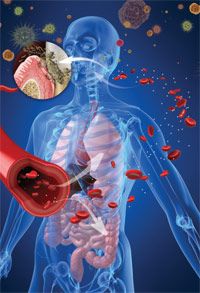
When oral bacteria enters the bloodstream, it travels throughout the body and can attach to the fatty plaque inside the coronary arteries, causing inflammation in the wall of the artery. The inflammation further causes plaque to build up inside the arterial wall, leading to a condition called atheroscelerosis, or hardening of the arteries, that can lead to blockage and eventually a heart attack.

“It’s a cascading event,” said Backs. “It’s important to detect the disease early to avoid consequences.” Treating and preventing periodontal disease can lower the risk of heart attack and stroke. 

Research shows a strong correlation between periodontal disease and Type 2 diabetes. People with diabetes are more likely than non-diabetics to develop periodontal disease. Periodontal disease is more severe in diabetics with insufficient blood sugar control. 

This occurs for a variety of reasons. First, diabetes sufferers are more prone to infections, and diabetes reduces the body’s resistance to infection. Second, periodontal disease elevates blood sugar levels in the body. Diabetics with periodontitis are more likely to suffer from high blood sugar levels, making it difficult to keep their blood sugar under control. Lastly, high glucose levels promote the growth of gum disease-causing bacteria. 

“When these patients undergo treatment for their periodontal disease, their diabetes status significantly improves,” said Backs. 

The challenge for the most part, however, is getting medical practitioners and the dental community to work together. “They need to share information and collaborate on patient care,” said Backs, who is working to build relationships within the dental community. Both sides need to recognize the role that oral health plays and work together to improve patient outcomes. 

In the meantime, people need to raise their level of personal dental hygiene by brushing, flossing and making regular visits to their dentist. By taking preventative measures, you can reverse your risk of developing these diseases.

“Taking care of yourself is the best you can do for the ones that you love,” said Backs.